

“I sometimes feel beside myself with pain…”
“There are good days and bad days…it’s unpredictable…”
“When will the pain end?… what happens if it never does?…”
“Fed up feeling frustrated and helpless…”
“Can be overwhelming….trapped in vicious cycles …like spinning out of control…”
Do you recognise any of this about your own experiences of pain? Or do you care for someone who is living with discomfort and pain? If your answer is “yes”, this blog may be relevant for you.
The bodymind in pain management
There are different types of pain – acute, chronic, neuropathic. Pain is both a physiological process and an emotional and mental experience. A key aspect of pain management is exploring the links between the body and mind. That’s because what we think about pain, the meaning we give to it and the emotions we attach to it – such as apprehension, anxiety and fear – can have profound effects on our personal experiences of pain.
If you are experiencing pain, you are always advised to see your doctor. This is the starting point to investigate what is causing your pain, and how best to treat it.
Chronic pain is often complicated and difficult to treat. Conventional treatments such as painkillers are not always effective. If you’re experiencing pain on a regular basis, alternative approaches such as hypnotherapy may be helpful for your own situation.
Managing pain with hypnotherapy

The British Pain Society recognises that hypnotherapy and self-hypnosis can be useful relaxation techniques as part of a pain management routine. Hypnotherapy is also endorsed by the National Institute for Health and Care Excellence (NICE) as a treatment for Irritable Bowel Syndrome after 12 months of non-effective pharmacological intervention.
We know from recent research that hypnotherapy produces altered activity in key regions of the brain involved in pain regulation, including the anterior cingulate, prefrontal and insular cortices. A meta-analysis published recently in Neuroscience & Biobehavioural Reviews on the effectiveness of hypnotherapy as a technique for pain reduction reported “convincing evidence that hypnosis produces substantive analgesia”.
As a hypnotherapist with a professional specialty in pain management, I help clients to improve their coping skills and teach self-hypnosis pain relief techniques to support a wide variety of specific pain issues, such as headaches – tension headaches, cluster headaches and migraines – and backpain.
Everyone experiences pain differently. And everyone comes to hypnotherapy with their unique personal circumstances. Understanding what each client wishes to achieve from the therapy is always important so that individual treatment plans can be made.
Hypnotherapy enables you to reduce stress and calm the nervous system to become less reactive to pain. If we have become hyper-vigilant for the pain (always looking out for it), the pain circuits of the brain get sensitised. Chronic pain syndromes are common also in the presence of stress. When we focus on relaxation and changing the thought patterns related to our distress and discomfort, the way that pain is perceived can shift.
Another benefit is that hypnotherapy sessions often can enhance a sense of personal control and can help clarify what’s possible, especially when combined with mindful and compassionate self-awareness. However, this is not the same thing as offering a cure. So remember – hypnotherapy for pain is concerned with pain management, rather than providing any curative solution for a health condition.
Self-compassion and mindful hypnotherapy
What about compassion and self-awareness? Developing compassion and mindful presence has been a central part of my mindfulness teacher training with Breathworks. An international mindfulness programme and community of practitioners founded by Vidyamala Burch, Breathworks takes a specifically compassion-focussed approach to living with pain.
Many of my client sessions are informed by this deeply experiential approach. Throughout my own journey of training as a mindfulness teacher, there have been several ‘ah-ha’ moments. Such as sensing and feeling the difference between ‘primary suffering’ and ‘secondary suffering’. And becoming aware of how – when we can learn to spot such differences as felt sensory experience – this can become a starting point for facilitating healing transformation.
Mindful compassionate practices can teach us how to develop living authentically for ourselves. Our starting point is empowered self-awareness. Through regular embodied practice, we can learn transformative ways to help ‘take the edge off’ our challenging sensations and experiences. This can help to reduce the levels of physical and emotional intensity we feel, protecting us from damaging ‘boom and bust’ cycles.
When we begin to recognise the auto-pilot of habituated thinking, we also can help to clear – or move on – blocked or stagnant energy from the body and mind. In holistic terms, our bodymindsense can be supported to stabilise so that we may become more open and receptive to flow and energetic balance in our lives.
Another point of interest is that the relationship between mindfulness and hypnotherapy is emerging now as an area of cutting-edge clinical research. Recent hypnotherapy studies compare the therapeutic effects of different types of contemplative practices, from various forms of meditation and spiritual practice including Dzogchen meditation, to music and the intentional use of imagination.
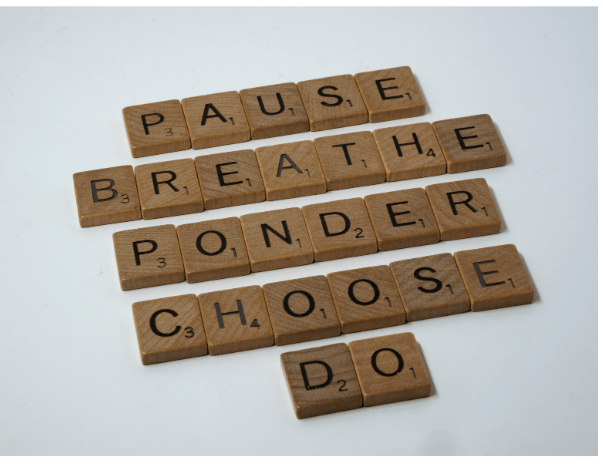
When we can practise mindfulness techniques that help us to ‘pause’, ‘breathe’, ‘ponder’, ‘choose’ and ‘do’ in ways that are compassionate and self-soothing, we can create bridges of awareness to access our expanded states of consciousness, as happens in hypnotherapeutic guided imagery for pain relief.
Home in homeostasis

Whilst it can be informative to know about research statistics, from the holistic and integrated health perspective it’s crucial nonetheless to remember that the human body has a built-in repair potential of its own.
The tendency to restore to natural equilibrium is called ‘homeostasis’. Finding balance in homeostasis is a purely natural process…not the brainchild of brain science!
So when we are ill, in discomfort or pain, being in resonance with our own self-healing capability, can be tremendously helpful. Being self-present and coming back to that foundational place where you can be at home in homeostasis.

Knowing that there are things we can do for ourselves to assist our healing is empowering in itself. We can attempt to remove obstacles to our recovery, to support and build up – as best we can – the multiple energies and functions that make up our own unique being. These can help return us to our felt, embodied sense of ‘home’, whether or not we are taking pharmacological drugs as part of a pain management plan.
So, when it comes to considering hypnotherapy as an alternative or complementary approach, take the time you need to consider what’s right and meaningful for you. Many people say they find hypnotherapy an effective way of supporting themselves to live with chronic pain. It’s worth remembering though, as with any treatment, it is not guaranteed to work for everybody. Hypnotherapy is a natural therapy with no side effects, however, so it could be worth giving it a go – particularly if other treatments haven’t worked for you so far.
If you would like to enquire about hypnotherapy for pain management with Bodymindsense or book an appointment, there is further information available here.
Photo credits:
Engin Akyurt from Pexels
Brett Jordan from Unsplash
Hulki Okan Tabak from Unsplash
Aleksandr Burzinskij from Unsplash